So you think any old brazing rod will do? That’s a common mistake. Welders swear by just two specific rods for steel, so let’s cut through the noise and see why they’re obsessed.
| All Metal Brazing Rods 1/16″ x 13″ 20 Pack | [zw asin=”B0CR3WG9KV” alt=”All Metal Brazing Rods 1/16 x 13 20 Pack”] | Best Overall Value | Metal Types Compatible: Steel, cast iron, copper, brass, stainless steel | Rod Length: 13 inches | Rod Diameter: 1/16 inch | VIEW LATEST PRICE | Read Our Analysis |
| Bernzomatic Bronze Flux-Coated Brazing Welding Rods | [zw asin=”B000BO8WU0″ alt=”Bernzomatic Bronze Flux-Coated Brazing Welding Rods”] | Professional Choice | Metal Types Compatible: Steel, cast iron, copper, brass, stainless, chrome-plated, galvanized iron | Rod Length: 12 inches | Rod Diameter: Not specified | VIEW LATEST PRICE | Read Our Analysis |
More Details on Our Top Picks
All Metal Brazing Rods 1/16″ x 13″ 20 Pack
[zw asin=”B0CR3WG9KV” alt=”All Metal Brazing Rods 1/16 x 13 20 Pack”]Best Overall Value
View Latest PriceThe All Metal Brazing Rods deliver solid performance at a wallet friendly price point. You’ll grab a pack of twenty 1/16″ x 13″ rods that work on steel, cast iron, copper, brass, and stainless steel. No separate flux paste needed, because each rod has a built-in flux core. Just fire up your standard propane or MAPP torch, and you’re ready.
These joints come out strong, leak-proof, and corrosion-resistant, handling vibration without cracking. For household fixes, car repairs, or plumbing, they’ve got you covered.
And here’s the kicker: at this price, you’re stocking up for multiple projects. Weighing just 3.2 ounces, they’re easy to store. Plus, the 30-day return policy and warranty sweeten the deal.
- Metal Types Compatible:Steel, cast iron, copper, brass, stainless steel
- Rod Length:13 inches
- Rod Diameter:1/16 inch
- Number of Rods Per Pack:20 rods
- Flux Coating:Built-in flux core
- Torch Compatibility:Standard handheld propane torches, including MAPP gas
- Additional Feature:Built-in self-fluxing core
- Additional Feature:Works with handheld propane
- Additional Feature:Leak-proof and corrosion-resistant
Bernzomatic Bronze Flux-Coated Brazing Welding Rods
[zw asin=”B000BO8WU0″ alt=”Bernzomatic Bronze Flux-Coated Brazing Welding Rods”]Professional Choice
View Latest PriceSteel’s stubborn, but these rods tame it without breaking a sweat, which is why they’re a professional choice for repair work that demands reliability. You’ll get four 12-inch rods, each coated in flux, so you skip the messy paste step. They handle steel, cast iron, copper, even chrome-plated stuff. Just grab your oxygen-fuel torch, heat to around 1,600°F, and watch the bronze flow into joints with 50,000 to 60,000 psi tensile strength. That’s serious holding power.
- Strong corrosion resistance built in
- Works on galvanized or stainless too
- Made in the USA by a company with over a century of know-how
You’ve got Bernzomatic’s backing: US-based customer service, a warranty, and a 30-day return window. Simple, durable, no fuss.
- Metal Types Compatible:Steel, cast iron, copper, brass, stainless, chrome-plated, galvanized iron
- Rod Length:12 inches
- Rod Diameter:Not specified
- Number of Rods Per Pack:4 rods
- Flux Coating:Flux-coated
- Torch Compatibility:Oxygen-fuel torches (e.g., Bernzomatic Brazing Torch Kit)
- Additional Feature:50,000-60,000 psi tensile strength
- Additional Feature:Requires oxygen-fuel torch
- Additional Feature:Made in the United States
Factors to Consider When Choosing Brazing Rods for Steel
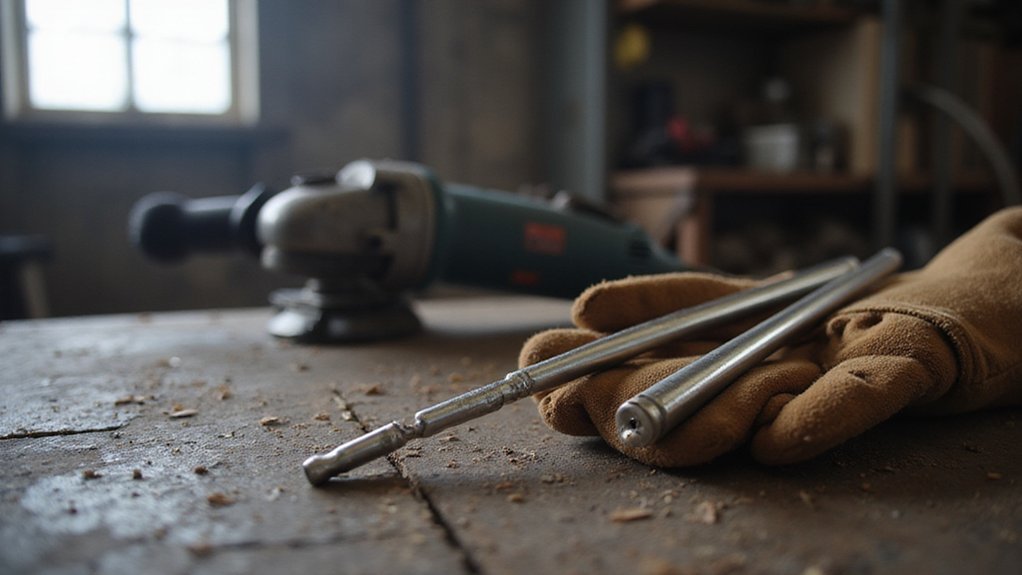
When you’re picking a brazing rod for steel, start with the alloy composition, because that directly determines the bond’s strength and melting point. Don’t ignore the flux coating type either, as it keeps oxidation at bay during heating, and you’ll need to match the rod to your torch’s capabilities for consistent results. Also, consider the joint strength demands and the specific metals you’re bonding, since a mismatch can lead to a weak connection that fails under stress.
Alloy Composition
Since alloy composition determines how well a brazing rod bonds with your steel and how strong the joint will be, you need to pay close attention to what’s inside that rod. You’ll typically find copper, silver, or zinc based alloys, each offering different perks. Silver alloys, for example, flow beautifully and create corrosion resistant joints, while copper based rods are tougher but demand higher heat.
Lower melting point alloys make your job easier by requiring less torch time, but they might not hold up under heavy stress. High quality rods include elements like phosphorus or silicon, which improve bonding and flow without extra fuss. For steel repairs where durability matters, avoid cheap mixes and pick an alloy that matches your project’s needs. That simple choice saves you headaches later.
Flux Coating Type
Because flux coating directly affects how clean and strong your bond turns out, you’ve got to match the coating type to your specific steel job. This coating prevents oxidation and contamination during heating, so your joint stays pure. Different fluxes pair with specific metals and temperature ranges, so check the rod’s label carefully.
A well-chosen flux coating does two big things: it helps the filler flow smoothly into the joint, and it boosts corrosion resistance over time. For steel, look for a flux that handles high heat without burning off too fast. You’ll also get better penetration and fewer defects when you pick the right one. And here’s the kicker: flux coated rods mean you rarely need to add extra flux, saving you time and mess. Just match the coating to your base metal’s quirks, and you’re golden!
Torch Compatibility
Before you buy, make sure your brazing rods actually get along with your torch. You can’t just grab any rod and hope for the best. Check that your rods withstand your torch’s operating temperature range, typically between 1,595°F and 1,630°F for brazing. Using mismatched temperatures leads to weak joints.
Next, confirm you’re picking rods designed for your specific setup. Handheld propane, MAPP gas, or acetylene torches each demand different rod characteristics. If you prefer oxygen-fuel torches, make sure your rods are built for that power source. And don’t overlook the flux coating: verify it’s suitable for your torch type to ensure smooth bonding.
Finally, match rod diameter and length to your torch’s flame size and project scale. A tiny rod with a big torch? That’s a recipe for frustration. Choose wisely, and your repair goes smoothly.
Joint Strength Needs
When you’re brazing steel, the strength you need from the joint isn’t a guess, it’s the whole ballgame. You’ve got to match the rod’s tensile muscle to the load that joint will carry. For high-stress parts, reach for rods with higher alloy content; those give you that tough, durable bond that shrugs off pressure and vibration. A proper flux coating is non-negotiable too, it keeps oxidation at bay so the filler wets the steel fully, locking in maximum adhesion.
Don’t forget the heat curve: a hotter working temperature usually fuses the metals more completely, which means a stronger final hold. Prep your surfaces like your joint depends on it, because it does; a clean, roughened area gives the brazing material something to bite into. For parts facing constant stress or movement, pick a rod engineered for that abuse. Short story: nail down your strength demands first, then choose the rod that delivers exactly that.
Metal Types Bonded
Every brazing rod isn’t a one-size-fits-all solution—you’ve got to match it to the specific metals you’re bonding. Steel’s one thing, but throw in cast iron, copper, or stainless steel, and your rod choice changes completely. You need a filler metal with a melting point and composition that’s compatible with each base metal. This isn’t just about sticking them together; it’s about preventing corrosion, leaks, or joint failure down the line. For high-stress or pressure applications, pick rods formulated for those exact metal combos. Consider thermal expansion and reactivity too. A rod that bonds steel to brass must handle different expansion rates. Get this right, and your bond stays strong. Get it wrong, and you’re chasing weak spots. Always check the rod’s spec for the metals you’re joining.
Rod Diameter Size
Two main rod diameters dominate steel brazing, and picking the right one comes down to how much control you need versus how fast you want to lay down filler. For delicate repairs on thin metals, grab a slim 1/16-inch rod; it gives you pinpoint accuracy without burning through fragile edges. That’s your jewelers’ touch for detailed work. Need to fill a chunkier gap or handle a structural joint? Step up to a thicker 3/32-inch option; it shoves in far more filler with each sweep, so you’re not dawdling around. Matching the diameter to the base metal thickness is key: thin stock means thin rod, heavier stock calls for the beefier stuff. And don’t overlook your torch size. A skinny rod under a roaring flame melts before you’re ready, while a fat rod chokes on a small tip. Get that pairing right, and your bond will flow like clockwork.
Work Temperature Range
One of the most critical factors in choosing a brazing rod is its work temperature range. This tells you the ideal heat for melting the rod and creating a strong joint without harming your steel. Most rods operate between roughly 1,200°F and 1,630°F, but the exact range depends on the alloy. You need to match this to your project. If you go too hot, you risk overheating and degrading the rod, or worse, damaging your workpiece. Too cold, and you’ll get a weak, brittle bond that won’t hold. So, always check the manufacturer’s specified range. It guarantees the filler metal flows properly and bonds effectively. Pick a rod whose melting point fits your task, and you’ll get durable, reliable results every time!
Package Quantity
So, how many brazing rods do you actually need? Start by matching the package quantity to your project scope. If you’re tackling just a few occasional repairs, a smaller pack works fine and avoids unnecessary wastage. But for extended or frequent brazing work, larger packages like bundles of 20 rods deliver much better value. You don’t want to run out mid job, so think ahead. Also, confirm that the rods in your chosen package have the right length and diameter for your specific repair needs. A common mistake is buying a big box of rods that don’t fit your application. Get the quantity that keeps you working without leftover clutter.